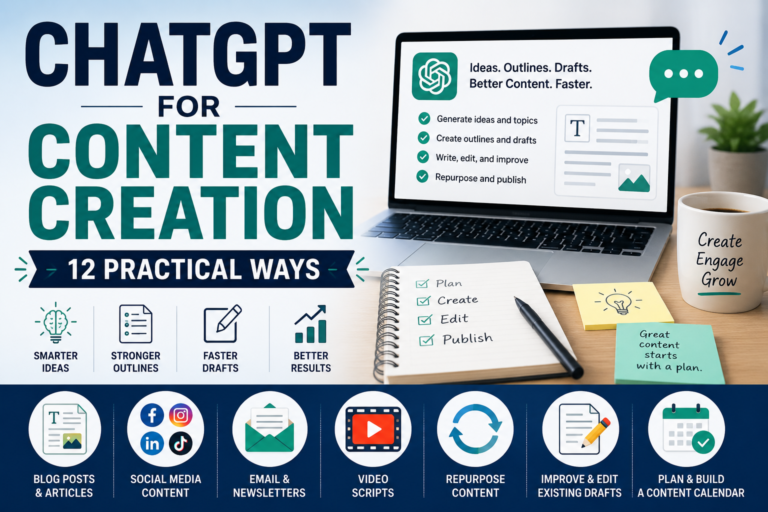

How to Use Writesonic: 15 Powerful Ways to Create Better Content in 2026
Learning how to use Writesonic can help you create content faster, research topics, improve SEO, optimize existing pages, and build more efficient marketing workflows.
Writesonic began primarily as an AI writing platform, but the platform has evolved considerably.
Today, Writesonic combines AI content creation with SEO tools and features designed around visibility in AI-powered search experiences. Its current platform can track brand visibility across traditional search and AI systems such as ChatGPT, Claude, Gemini, Perplexity, and others.
For bloggers, marketers, affiliate publishers, businesses, and content creators, this makes Writesonic particularly interesting.
Instead of simply asking AI to generate paragraphs, you can use it across multiple stages of the content process.
In this beginner-friendly guide, we’ll explore 15 practical ways to use Writesonic in 2026.
What Is Writesonic?
Writesonic is an AI-powered marketing and content platform.
Its tools cover areas including:
- AI article creation
- Keyword research
- SEO optimization
- Content refreshing
- Brand voice
- AI search visibility
- Generative Engine Optimization (GEO)
- Competitor and citation analysis
- Marketing workflows
Writesonic describes its current approach as combining traditional SEO with optimization for AI-generated search results.
That distinction is becoming increasingly important.
People are no longer discovering information exclusively through traditional search engines. They are also asking AI assistants questions directly.
For website owners, this creates another challenge: producing useful content that can perform in search while also being understandable and potentially referenced by AI systems.
Why Learn How to Use Writesonic?
Knowing how to use Writesonic can be useful because content marketing involves much more than writing.
You have to:
research topics,
understand search intent,
develop useful articles,
optimize pages,
update older content,
maintain consistency,
and measure what works.
Writesonic attempts to bring several of those processes into one platform.
Its SEO Suite, for example, includes keyword research and content optimization capabilities.
Let’s look at the practical ways beginners can use it.
1. Use Writesonic to Generate Content Ideas
One of the easiest places to begin is brainstorming.
Instead of staring at an empty document wondering what to publish, give Writesonic information about your niche.
For example:
“Give me 20 beginner-friendly article ideas about AI productivity for small business owners.”
You can then evaluate the suggestions and select topics that match your audience.
AI should assist your content strategy rather than determine it completely.
Choose topics because they genuinely answer questions your readers are likely to have.
2. Research Topics Before Writing
Good articles usually begin with good research.
Before creating a full article, use Writesonic to investigate:
key concepts,
questions readers ask,
common problems,
important terminology,
and potential subtopics.
This gives you a foundation before drafting.
You can then verify important facts using authoritative sources.
This research-first approach usually produces stronger content than immediately telling an AI system to “write an article.”
3. Create Detailed Article Outlines
Once you have a topic, build an outline.
For example:
“Create a detailed beginner-friendly outline for an article about using AI to improve productivity.”
Review the structure carefully.
Remove sections that add little value.
Add sections that address questions your audience actually needs answered.
Your outline becomes the roadmap for the article.
4. Create Long-Form Articles
Long-form content creation remains one of Writesonic’s major capabilities.
Its Article Writer provides controls covering elements such as tone, internal linking, source citations, FAQs, calls-to-action and other article components.
This can dramatically accelerate the first-draft process.
But don’t simply generate and publish.
Read the entire article.
Correct inaccuracies.
Improve examples.
Remove repetition.
Add personal expertise or original observations wherever possible.
AI can produce the draft; you remain the editor and publisher.
5. Improve Existing Articles
Learning how to use Writesonic isn’t only about creating new pages.
Existing content can be extremely valuable.
Take an older article and look for opportunities to:
improve weak sections,
update outdated information,
add FAQs,
strengthen introductions,
improve headings,
and answer additional reader questions.
This can be particularly useful for websites that already have a growing content library.
Another practical way to learn how to use Writesonic is to improve content you have already published.
6. Perform Keyword Research
SEO starts with understanding what people are searching for.
Writesonic’s SEO tools include keyword research capabilities designed to help identify relevant search terms.
Rather than targeting random keywords, look for phrases closely connected to your audience’s problems.
For example, instead of targeting:
AI tools
you might investigate more specific searches such as:
best AI tools for small businesses
or
AI productivity tools for beginners
Specific search intent can often produce better content opportunities.
7. Optimize Content for SEO
After creating an article, use Writesonic’s optimization features to identify potential improvements.
SEO isn’t simply repeating a keyword many times.
A strong article should also have:
clear headings,
logical organization,
useful internal links,
credible external references,
descriptive images,
and genuinely helpful information.
Search optimization works best when it improves the reader’s experience rather than interfering with it.
8. Strengthen Internal Linking
Internal links connect related pages across your website.
They help readers discover additional useful information and help search engines understand the relationship between your pages.
When writing a new article, identify older posts that naturally support the topic.
For example, an article about AI writing tools might link to guides about ChatGPT, Copy AI, Jasper AI, or other relevant platforms.
Writesonic’s Article Writer includes internal-linking capabilities as part of its content workflow.
9. Create Marketing Copy
Writesonic can also help with shorter marketing material.
You can experiment with:
product descriptions,
landing-page copy,
email subject lines,
social-media captions,
advertising concepts,
calls-to-action,
and promotional messages.
The important word is experiment.
Generate several alternatives instead of accepting the first response.
Compare them and select the strongest direction.
10. Maintain a Consistent Brand Voice
As your business grows, consistency becomes increasingly important.
Your website articles, emails, social posts, and product pages should feel like they belong to the same brand.
AI writing can easily become generic.
Establish clear instructions about:
tone,
audience,
sentence style,
terminology,
and phrases you want to avoid.
As you learn how to use Writesonic, maintaining a recognizable brand voice becomes increasingly important.
Writesonic’s current Article Writer supports brand and author profiles and brand/style controls for content production.
11. Create Content for Social Media
A long article can become much more than one piece of content.
Take a useful article and transform its key ideas into:
short social posts,
video ideas,
carousel concepts,
captions,
questions,
tips,
and email content.
For example, one 2,000-word guide might contain enough material for several days of social-media posts.
This is called content repurposing.
It helps you get more value from the research you’ve already completed.
12. Optimize Content for AI Search
This is one of the more interesting developments around Writesonic.
The platform now includes tools aimed at Generative Engine Optimization, or GEO.
Its Content Optimization system analyzes existing website content for opportunities that may improve visibility in AI-generated responses across systems such as ChatGPT, Claude, Gemini, and Perplexity.
Traditional SEO remains important.
But website owners should increasingly understand how AI systems discover, interpret, and cite web content as well.
13. Track Your Brand’s AI Visibility
Imagine knowing how often AI assistants mention your business when people ask questions about your industry.
Writesonic’s AI visibility tools are designed to measure metrics such as:
visibility,
share of voice,
sentiment,
and citation sources.
This represents a different type of marketing analytics.
Instead of looking only at Google rankings, marketers can increasingly examine whether their brands appear inside AI-generated answers.
14. Find Content Gaps
Your competitors may rank or receive AI citations for topics you haven’t covered.
Those gaps can become content opportunities.
Writesonic’s current platform analyzes content and citation gaps and can surface topics that competitors are being referenced for while your brand is absent.
You can use these discoveries to build new:
articles,
tutorials,
comparison pages,
FAQs,
and supporting resources.
This creates a more strategic content calendar.
15. Build a Complete Content Workflow
The most powerful way to learn how to use Writesonic is to stop thinking about it as only a writing generator.
Build a workflow.
For example:
Research → Keyword → Outline → Draft → Edit → Optimize → Internal Links → Publish → Refresh → Measure
That is much more valuable than simply generating articles.
Once you understand how to use Writesonic for individual tasks, you can connect those tasks into a complete content workflow.
AI becomes part of your publishing system rather than a replacement for human judgment.
Writesonic for Bloggers
Bloggers can use Writesonic throughout their publishing workflow.
You might use it to research a topic on Monday, create an outline, generate a draft, edit the content manually, optimize the page, and then repurpose the article into social posts.
The time saved can then be invested in producing better research and more useful content.
Writesonic for Affiliate Marketing
Writesonic can also be useful for affiliate publishers.
Possible content formats include:
product tutorials,
comparison articles,
buyer guides,
alternative pages,
feature explanations,
and educational articles.
However, affiliate content should never exist simply to push links.
Your primary goal should be helping readers make informed decisions.
Trust is ultimately more valuable than clicks.
Writesonic for Small Businesses
Small businesses often don’t have dedicated teams for every marketing activity.
The same person may handle:
website content,
SEO,
email,
social media,
and product marketing.
A platform combining several of these workflows can therefore be useful.
The key is choosing features that genuinely save time instead of using AI simply because it’s available.
Writesonic vs General AI Assistants
General AI assistants can handle many writing and brainstorming tasks.
Writesonic becomes more interesting when your needs are specifically centered around content marketing, SEO and search visibility.
For occasional questions or brainstorming, a general-purpose AI assistant may be enough.
But businesses running a structured publishing and search strategy may benefit from Writesonic’s specialized tools.
Common Mistakes When Using Writesonic
Avoid treating AI-generated text as automatically publication-ready.
Always check:
facts,
statistics,
names,
links,
claims,
and recommendations.
Also avoid generating dozens of shallow articles simply because AI makes production faster.
Publishing more content doesn’t automatically create more authority.
Useful content creates authority.
Is Writesonic Worth Using in 2026?
That depends on what you need.
For someone who only occasionally writes content, a specialized marketing platform may be unnecessary.
For marketers, publishers, agencies, SEO professionals and businesses managing significant content operations, Writesonic offers a much broader toolkit.
Its current direction toward combining SEO and AI-search visibility makes it particularly noteworthy in 2026.
Before paying for any AI platform, compare its current features and pricing against the amount of value you realistically expect to receive.
Final Thoughts on How to Use Writesonic
Learning how to use Writesonic effectively means looking beyond simple AI text generation.
The platform can assist with research, content planning, article creation, SEO, optimization, marketing workflows, content refreshing and increasingly AI-search visibility.
Start with one real task.
Learn the workflow.
Measure whether it saves you time or improves your results.
Then expand gradually.
Used properly, Writesonic can become part of a broader content system rather than simply another AI writing tool.
For readers interested in another marketing-focused platform, continue with your How to Use Jasper AI guide.
You can also read our How to Use Copy AI guide to explore another AI platform designed around marketing and content workflows.